
The City and the Invisible Girl
Maigret and the Dead GirlThis flow traces how Louise passes through Paris repeatedly seen but rarely recognized as a person with needs and history.
increasing Bearing strength in each event
 decreasing
Bearing strength in each eventdecreasingA Face in the Newspaper

A Face in the Newspaper
A Public Image
Louise’s bruised face appears in the newspapers as an appeal for identification. The image is available to the city, but it brings almost no immediate response.
Seen Without Being Known
Jules Maigret reflects that Louise must once have had parents, schoolmates, and acquaintances who called her by name. Now she is dead and almost nobody appears to remember her, making social invisibility a central mystery alongside the murder.
Hundreds of Passing Encounters

Hundreds of Passing Encounters
A City Full of Witnesses
Louise has lived in Paris for years and passed through shops, streets, hotels, and workplaces. Many people have seen her, but their memories are detached from a name or a durable relationship.
Recognition Comes Slowly
Only Rose and a small number of witnesses respond, and even they know fragments. The city is crowded with potential witnesses, yet its scale allows a solitary person to disappear in plain sight.
A Bench in Trinité Garden
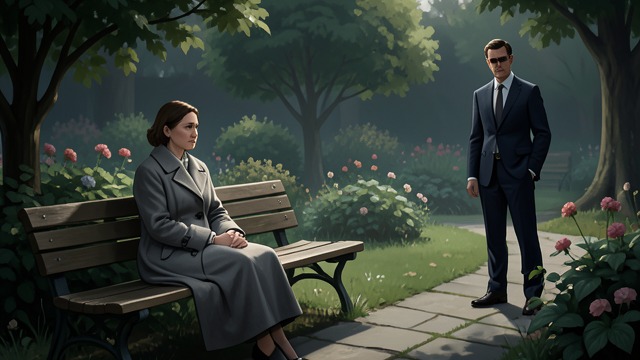
A Bench in Trinité Garden
A Place to Sit
Rose remembers Louise sitting alone in Trinité garden, doing nothing and meeting no one. The garden gives her a public place to spend time without requiring money or conversation.
Solitude in Public
Louise is not hidden away; she is visible in the ordinary spaces of the neighborhood. Yet visibility brings no connection, showing how loneliness can persist even among passersby and familiar streets.
The Borrowed Evening Appearance
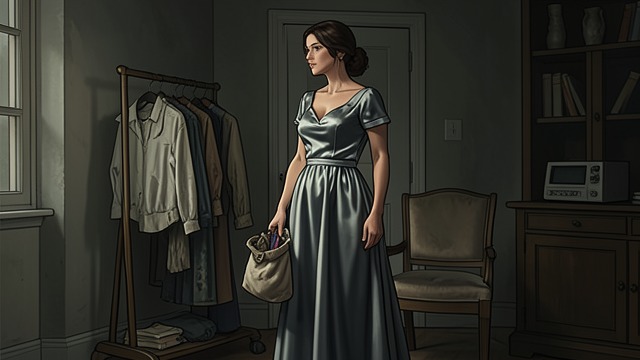
The Borrowed Evening Appearance
A Temporary Transformation
Louise exchanges her own worn clothes for a rented satin dress and borrowed accessories. For an evening she can enter a wedding reception without looking like the poor tenant she has become.
A Costume Without Security
The borrowed appearance gives access but not belonging. In the reception crowd she remains distinguishable, and after she leaves the clothes cannot protect her from the violence waiting outside.
A Name Restored by Investigation

A Name Restored by Investigation
Evidence Builds a Person
Jules Maigret gathers memories from people who knew Louise briefly: a landlady, a maid, a shopkeeper, a driver, and former companions. Their accounts restore her name and some of her history.
Recognition After Death
The investigation cannot give Louise the life she was denied, but it refuses to let her remain anonymous. Her story becomes legible through attention to ordinary traces that the city had left unnoticed.
The morning after Louise is found
During the first day of newspaper appeals
During Louise’s months in the Rue de Clichy neighborhood
Around nine on the murder night
Near the case’s resolution
